
If you’ve ever stood in the grocery store staring at protein powder labels wondering, “how much protein do I need to build muscle?” — you’re not alone. It’s one of the most common questions our trainers hear from clients here in Campton Hills, whether they’re brand new to strength training or chasing their next personal best.
The good news is that the answer isn’t complicated once you understand the basics. In this guide, we’ll break down exactly how much protein you need, why it matters, and how to actually hit your targets without turning every meal into a chore.
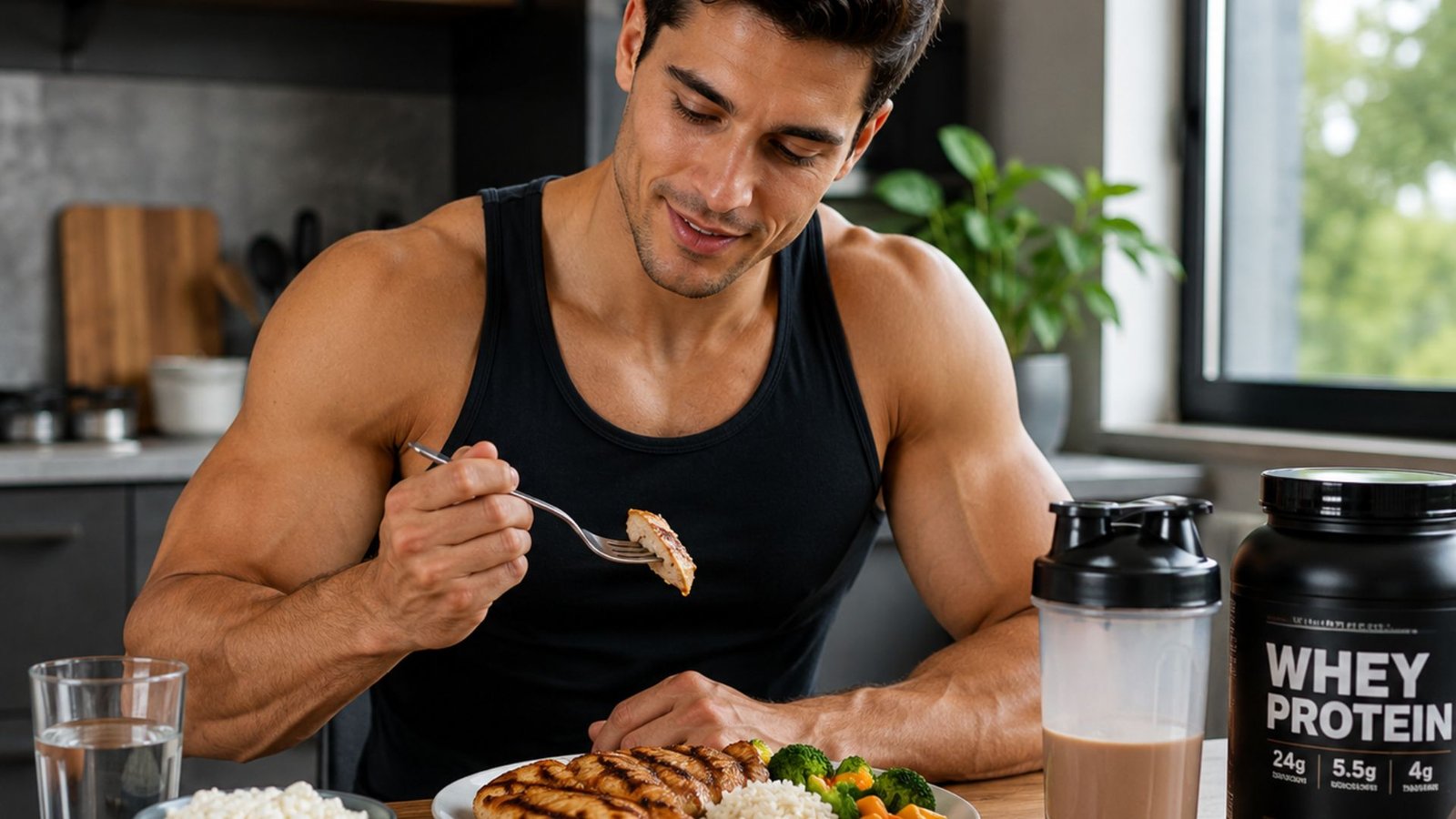
What Is Protein and Why Does It Matter for Muscle Growth?
Protein is one of three macronutrients (along with carbs and fats) that your body needs to function. It’s made up of amino acids, which are essentially the building blocks your muscles use to repair and grow after a workout.
Every time you strength train, you create tiny amounts of muscle damage. Protein is what your body uses to rebuild that muscle tissue, making it stronger and slightly larger than before. Without enough protein, your body simply doesn’t have the raw materials to recover and grow, no matter how hard you train.
How Much Protein Do I Need to Build Muscle? The Direct Answer
For most active adults looking to build muscle, research generally supports a range of 0.7 to 1 gram of protein per pound of body weight per day (roughly 1.6 to 2.2 grams per kilogram).
Here’s what that looks like in practice:
- 150-pound individual: 105–150 grams of protein daily
- 180-pound individual: 126–180 grams of protein daily
- 200-pound individual: 140–200 grams of protein daily
If you’re newer to strength training, the lower end of that range is usually plenty. If you’re training intensely several times a week or trying to preserve muscle while losing fat, aim for the higher end.
Does More Protein Always Mean More Muscle?
No. Beyond a certain point, extra protein doesn’t translate into extra muscle — your body can only use so much for repair and growth at one time. Consistent training, adequate calories, and quality sleep matter just as much as hitting a protein number.
Factors That Affect Your Personal Protein Needs
Your ideal protein intake isn’t one-size-fits-all. A few key factors shift the number up or down:
- Activity level. The more frequently and intensely you train, the more protein your muscles need to recover.
- Body composition goals. Building muscle and losing fat at the same time (often called body recomposition) typically requires higher protein intake to protect existing muscle.
- Age. Adults over 40 often need slightly more protein to combat natural muscle loss, a condition known as sarcopenia.
- Current diet. If you’re new to tracking nutrition, you may already be under-eating protein without realizing it.
Best Sources of Protein for Muscle Building
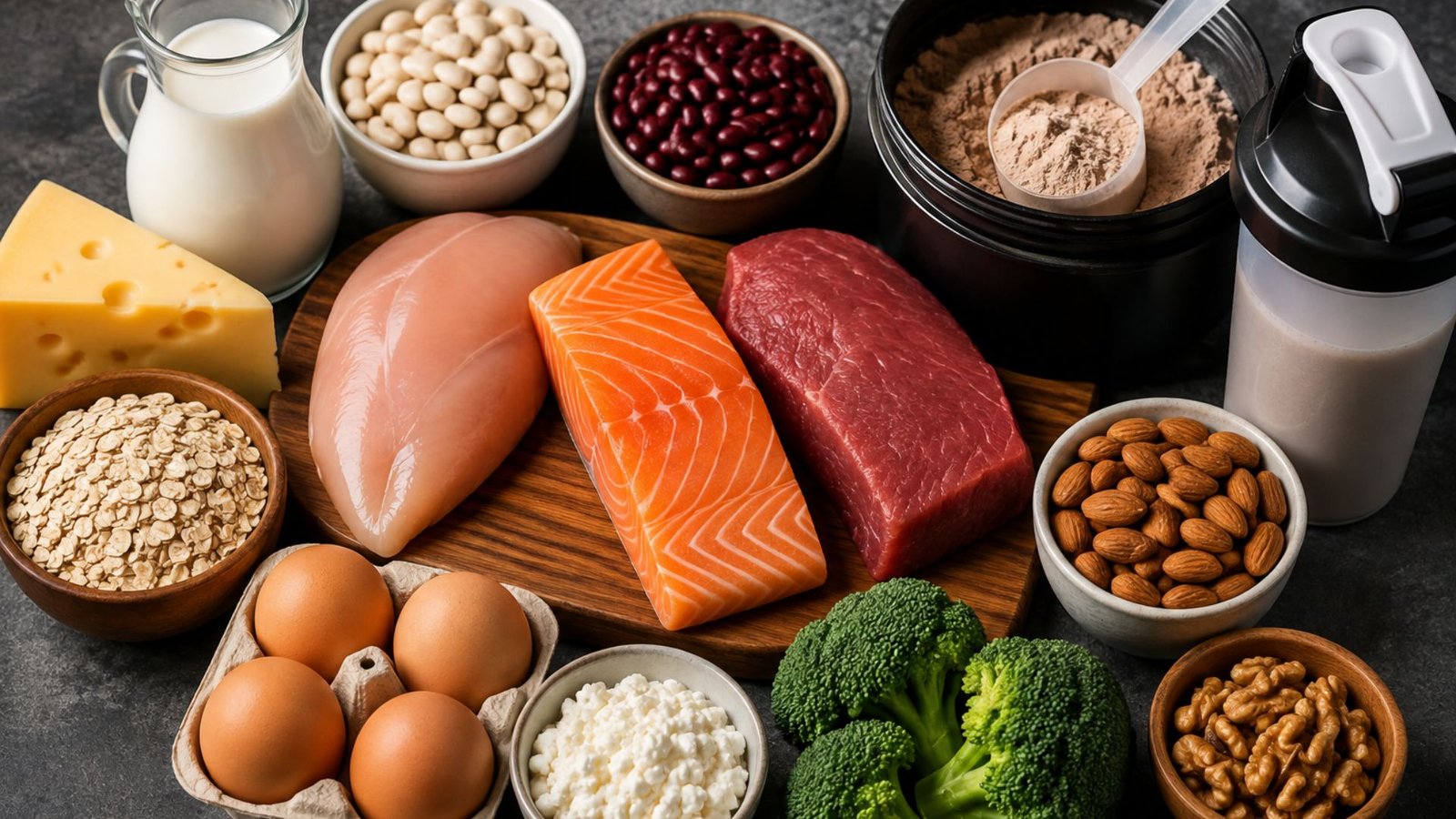
You don’t need fancy supplements to hit your protein targets — though they can help fill gaps. Focus first on whole food sources:
- Chicken breast, turkey, and lean beef
- Eggs and egg whites
- Greek yogurt and cottage cheese
- Fish like salmon, tuna, and tilapia
- Beans, lentils, and tofu
- Protein powder (whey, casein, or plant-based) as a convenient supplement
How to Spread Protein Throughout the Day
For best results, don’t save all your protein for one meal. Aim to distribute it across 3–4 meals, with roughly 25–40 grams per sitting. This approach supports steady muscle repair throughout the day rather than one large spike your body can’t fully use at once.
Practical Tips to Hit Your Daily Protein Target
Getting enough protein is simpler when you build a few habits:
- Start your day with protein. Add eggs, Greek yogurt, or a protein shake to breakfast so you’re not playing catch-up later.
- Prep protein in bulk. Cook a batch of chicken, ground turkey, or hard-boiled eggs at the start of the week.
- Keep convenient options on hand. Protein bars, jerky, and shakes are useful for busy days.
- Add protein to snacks. Pair fruit with cottage cheese or nuts instead of eating carbs alone.
- Track for a week. Use a simple app to see where you actually land — most people are surprised by the gap between what they think they eat and what they actually eat.
Common Mistakes to Avoid
- Undereating overall. Protein alone won’t build muscle if you’re in a large calorie deficit.
- Relying only on supplements. Whole foods provide additional nutrients powder can’t replace.
- Inconsistent intake. Hitting your target on Monday and forgetting by Friday won’t move the needle.
- Ignoring training and sleep. Protein supports muscle growth, but it doesn’t replace consistent workouts and recovery.
FAQ: How Much Protein Do I Need to Build Muscle?
How much protein do I need to build muscle as a beginner?
Beginners typically see great results around 0.7 grams of protein per pound of body weight, alongside a structured strength training program.
Can I build muscle without eating a lot of protein?
You can build some muscle with lower intake, especially as a beginner, but progress will be slower and recovery may suffer over time.
Is it possible to eat too much protein?
For most healthy adults, higher protein intake is safe, but there's a point of diminishing returns where extra protein simply isn't used for muscle growth.
Do I need protein powder to build muscle?
No. Protein powder is a convenient tool, not a requirement. Whole foods can absolutely get you to your daily target.
How soon after a workout should I eat protein?
While the "anabolic window" isn't as strict as once believed, eating protein within a few hours of training supports recovery and is a good habit to build.
Conclusion
So, how much protein do I need to build muscle? For most people, the answer falls between 0.7 and 1 gram per pound of body weight daily, spread across several meals and paired with consistent strength training. Getting this number right — and building sustainable habits around it — makes the difference between spinning your wheels and seeing real, lasting progress.
Ready to Build a Personalized Plan That Actually Works?
Figuring out your exact protein needs is only one piece of the puzzle. The real results come from combining smart nutrition with a structured training program designed around your goals, schedule, and starting point.
At Campton Hills, our personal trainers take the guesswork out of both. We’ll help you dial in your nutrition, build strength safely, and stay consistent long enough to see real change.
Contact us today to schedule your consultation and start your personalized fitness plan.