
Strength training can absolutely support weight loss, especially when it is paired with consistent nutrition habits, daily movement, recovery, and patience. It helps you build or preserve muscle while losing body fat, which can make your body stronger, more capable, and better prepared to maintain progress over time. If you are comparing weight loss workouts, the best plan is usually not “weights or cardio,” but a balanced routine you can repeat safely and consistently.
How does strength training help with weight loss?
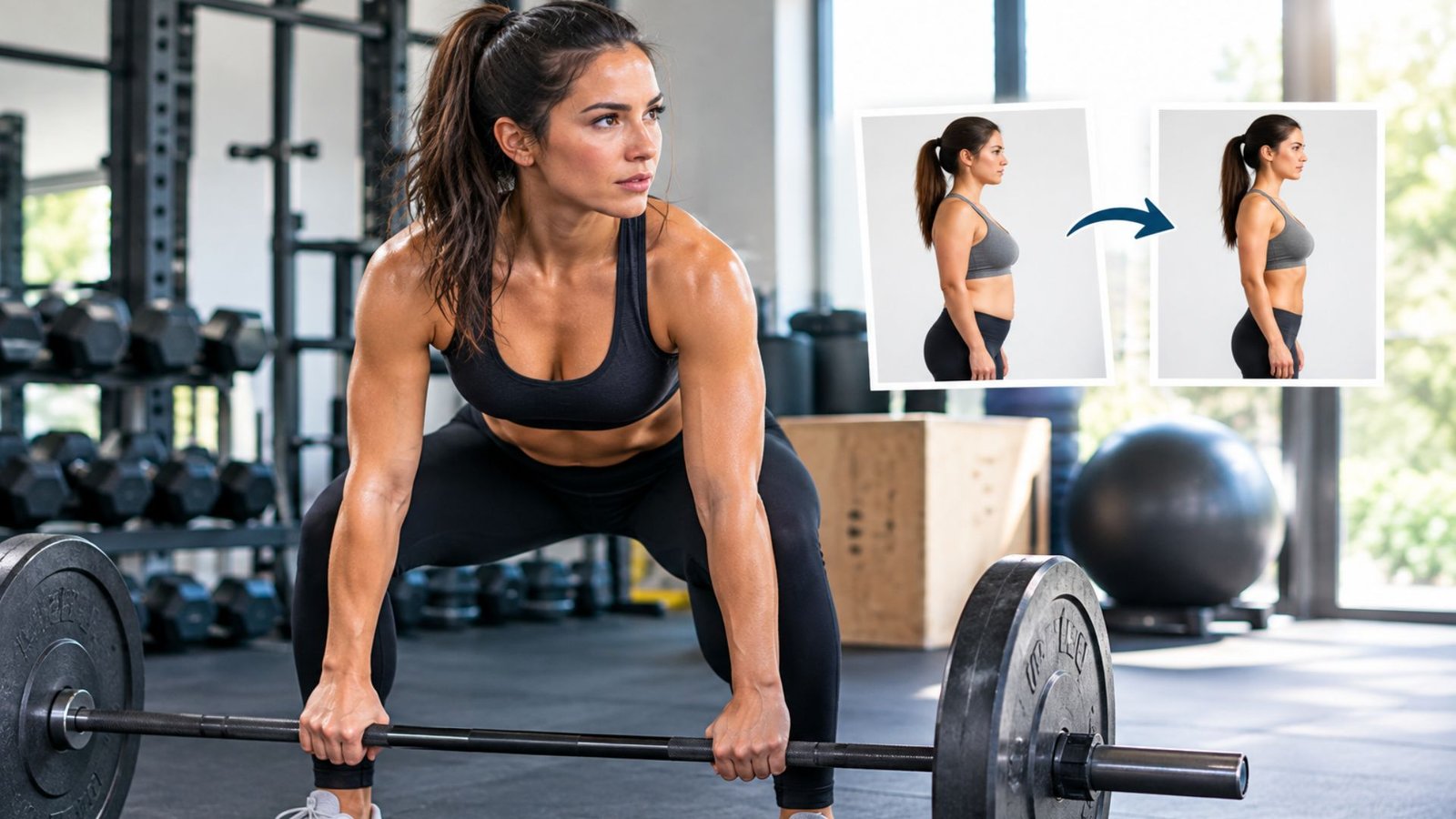
Strength training helps with weight loss by increasing the amount of work your muscles do, supporting lean muscle, and making everyday movement easier. During a calorie deficit, your body can lose both fat and muscle; lifting weights gives your body a strong reason to keep muscle while using stored energy. That matters because effective weight loss is not just about seeing a lower number on the scale—it is about improving body composition, strength, confidence, and long-term sustainability.
Unlike workouts that only focus on burning calories in the moment, strength training creates benefits that extend beyond the session itself. A well-planned strength training for weight loss routine can make stairs feel easier, improve posture, help you train harder over time, and reduce the feeling that exercise is only punishment for eating. You are not just “working out”; you are building a body that can do more.
Strength training benefits that matter for fat loss
The most useful strength training benefits for fat loss are practical, not flashy. You do not need complicated machines, extreme soreness, or two-hour gym sessions to get results. You need exercises that challenge large muscle groups, a structure you can follow, and enough recovery to repeat the work week after week.
Key benefits include:
Muscle preservation during weight loss: When you reduce calories, strength training helps signal that muscle is needed, which supports a leaner look as weight comes off.
Progressive overload: You can gradually increase reps, weight, sets, or control, giving your body a clear reason to adapt.
Better daily function: Stronger legs, hips, back, and core make walking, lifting, carrying, and standing easier.
Improved workout variety: Strength training for weight loss can be adjusted for beginners, home workouts, gyms, limited equipment, or time constraints.
More confidence with movement: As you get stronger, exercise often feels less intimidating and more rewarding.
This is why strength training is especially helpful for people who have tried only cardio and felt stuck. Cardio can be valuable, but if your plan leaves you tired, hungry, and weaker, it may be hard to maintain. Strength work gives your routine a foundation.
Cardio vs strength training for weight loss: which is better?
Cardio and strength training both help with weight loss, but they do different jobs. Cardio is often useful for improving endurance and increasing calorie expenditure, while strength training is especially useful for building or maintaining muscle and improving body composition. The best approach for most people is to combine them in a way that supports consistency rather than turning exercise into a daily battle.
If you enjoy running, cycling, swimming, rowing, or brisk walking, keep it in your plan. If you dislike long cardio sessions, you can still lose weight with strength training, walking, and nutrition habits. The question is not which type of exercise “wins,” but which mix helps you train regularly, recover well, and stay in a realistic calorie balance.
A simple comparison can help:
Training type | Best for | Practical use |
|---|---|---|
Strength training | Muscle, strength, shape, joint support, functional movement | 2–4 sessions per week focused on major movement patterns |
Cardio | Endurance, heart health, extra energy output, conditioning | 2–5 sessions per week, from walking to intervals |
Daily movement | Consistency, calorie expenditure, habit building | Steps, errands, chores, standing breaks, active commuting |
For effective weight loss, do not rely on one workout style to do everything. Strength training builds the engine, cardio improves conditioning, and daily movement keeps your total activity level from depending only on gym time.
The best fat loss exercises are the ones you can progress
Many people search for the “best” fat loss exercises, expecting a secret move that burns belly fat or melts pounds quickly. In reality, the most effective exercises are usually the basics performed with good technique and gradually increased challenge. Compound movements—exercises that use several joints and muscle groups—tend to be especially useful because they train more of the body at once.
Strong choices include:
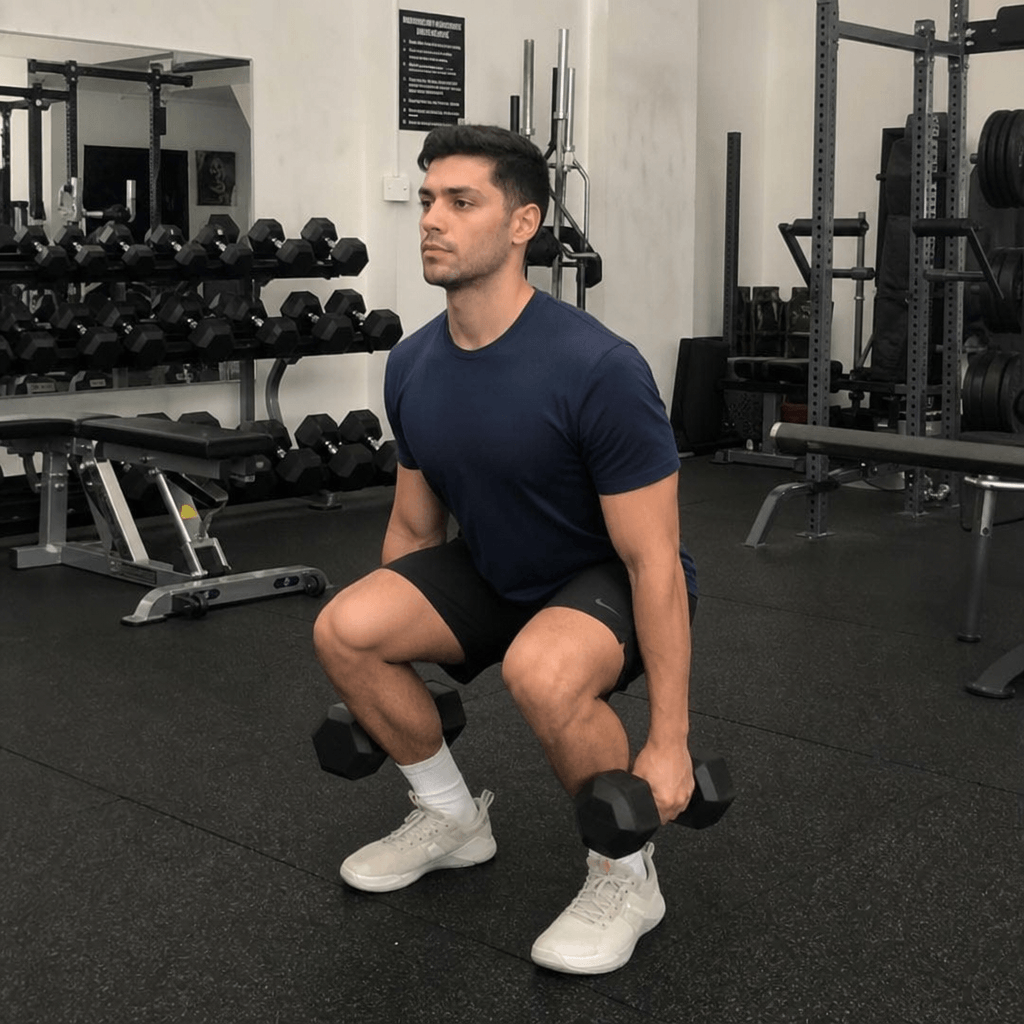
Squat variations: Bodyweight squats, goblet squats, split squats, or leg presses train the thighs, glutes, and core.
Hip hinges: Deadlifts, Romanian deadlifts, kettlebell deadlifts, and hip thrusts strengthen the glutes, hamstrings, and back side of the body.
Push movements: Push-ups, dumbbell presses, chest presses, and overhead presses build the chest, shoulders, and triceps.
Pull movements: Rows, assisted pull-ups, cable pulls, and band rows support the upper back and posture.
Core stability exercises: Planks, dead bugs, carries, and Pallof presses train the core to resist unwanted movement.
Loaded carries: Farmer’s carries and suitcase carries combine grip, core, posture, and conditioning in a simple format.
You do not need all of these in every workout. A balanced session might include one lower-body movement, one hinge, one push, one pull, and one core exercise. Over time, you can add a little weight, perform more controlled reps, or improve your range of motion.
Building a strength training for weight loss routine
A good strength training for weight loss routine should feel challenging but repeatable. If it leaves you so sore that you cannot move for three days, it is probably too aggressive. If it never becomes more difficult, it may not give your body enough reason to adapt.
Here is a simple three-day structure for beginners or returning exercisers:
Day 1: Full-body foundation
Goblet squat or bodyweight squat: 3 sets of 8–12 reps
Dumbbell row or band row: 3 sets of 10–12 reps
Push-up or chest press: 3 sets of 8–12 reps
Romanian deadlift or hip hinge drill: 2–3 sets of 8–10 reps
Plank: 2–3 rounds of 20–40 seconds
Day 2: Lower body and core
Reverse lunge or split squat: 3 sets of 8–10 reps per side
Hip thrust or glute bridge: 3 sets of 10–15 reps
Step-up or leg press: 2–3 sets of 8–12 reps
Suitcase carry: 3 short walks per side
Dead bug: 2–3 sets of 6–10 reps per side
Day 3: Upper body and total-body strength
Overhead press: 3 sets of 8–10 reps
Lat pulldown, assisted pull-up, or band pulldown: 3 sets of 8–12 reps
Deadlift variation or kettlebell deadlift: 3 sets of 6–10 reps
Incline push-up or dumbbell press: 2–3 sets of 8–12 reps
Farmer’s carry: 3 short walks
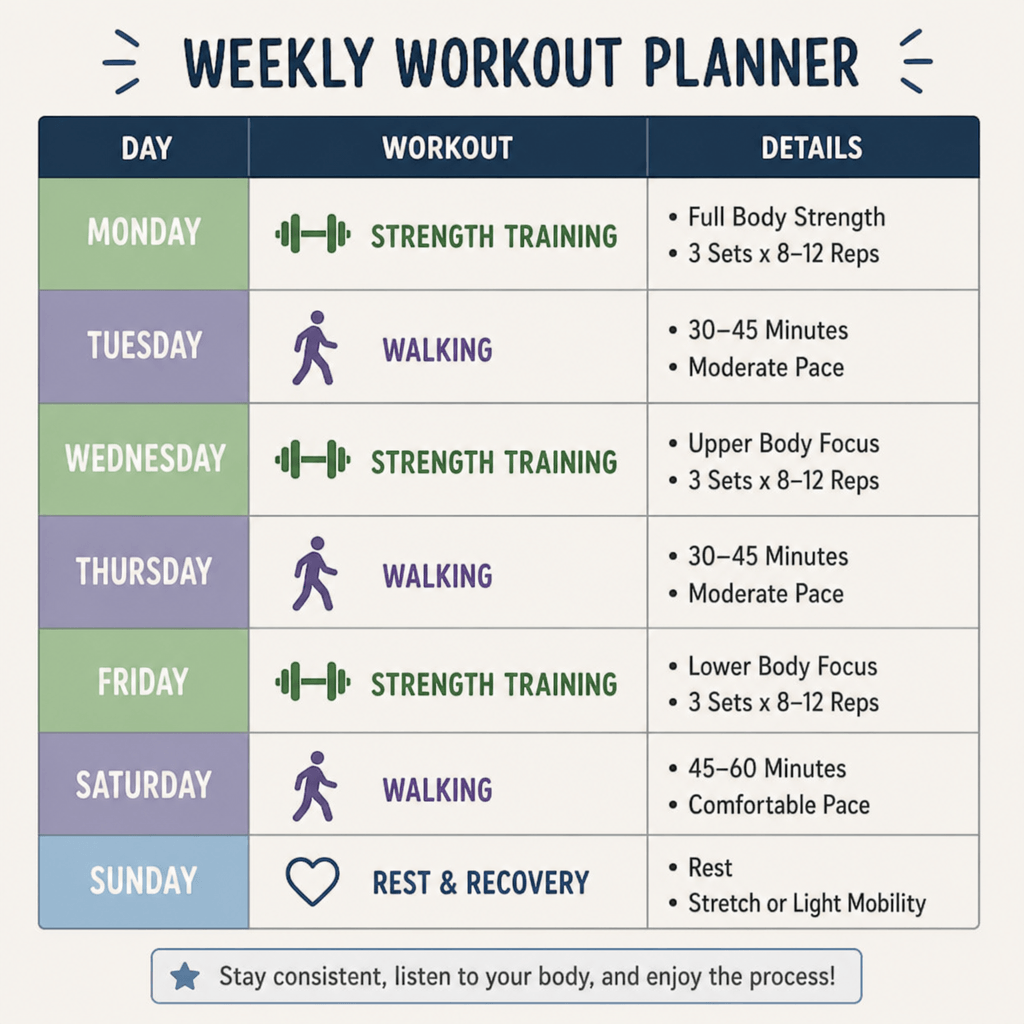
Rest at least one day between harder sessions when you are starting out. Add walking, easy cycling, or another form of light cardio on non-lifting days if it helps you stay active without draining recovery. The goal is to finish sessions feeling worked, not wrecked.
How to make weight loss workouts more effective
Weight loss workouts work best when they are part of a complete plan. Exercise matters, but it cannot fully compensate for inconsistent sleep, constant snacking, very low protein intake, or weekends that erase weekday progress. You do not have to be perfect, but your habits need to point in the same direction most of the time.
Use this checklist to improve your results:
Train the whole body: Do not only do abs, arms, or “problem areas.” Fat loss is systemic, while strength is built locally.
Track performance: Write down exercises, weights, reps, and how each set felt. Progress becomes easier to see when it is recorded.
Prioritize protein and fiber: Meals with protein, vegetables, fruit, beans, whole grains, or other filling foods can make a calorie deficit easier to maintain.
Keep walking: Daily steps are underrated because they are low stress, accessible, and easier to recover from than intense workouts.
Sleep enough to recover: Poor sleep can make hunger, cravings, motivation, and training quality harder to manage.
Avoid changing everything weekly: Give a routine several weeks before deciding whether it works.
Measure more than scale weight: Photos, waist measurements, strength gains, energy, and clothing fit can reveal progress the scale misses.
The biggest mistake is treating workouts as the whole strategy. Strength training for weight loss is powerful, but it works best when supported by food choices, recovery, and realistic expectations.
Common mistakes that slow progress
One common mistake is lifting weights that are too light forever. Beginners should start conservatively, but if every set feels easy and your form is stable, your body may need a slightly greater challenge. Progress does not have to be dramatic; even one extra rep or better control is progress.
Another mistake is doing too much too soon. A sudden jump into six intense workouts per week can lead to burnout, aches, or skipped sessions. It is better to train three days per week consistently than to force an extreme plan for ten days and quit.
Some people also chase soreness as proof of success. Soreness can happen, especially with new exercises, but it is not the goal. Quality reps, steady progression, and repeatable effort matter more than whether sitting down hurts the next day.
Finally, avoid using strength training as an excuse to ignore nutrition. Lifting can support effective weight loss, but body fat decreases most reliably when your overall energy intake and output create the right environment. That does not mean crash dieting; it means building meals and routines you can actually live with.
What results should you expect?
Results from strength training vary based on your starting point, nutrition, sleep, consistency, stress, training history, and overall activity level. Some people notice strength and energy improvements before major scale changes. Others see inches change while weight moves slowly because they are gaining or preserving muscle as they lose fat.
This is why patience matters. A good plan should not make you feel like you are racing against your body. If you are lifting regularly, eating in a supportive way, moving more during the day, and recovering well, you are building the conditions for lasting progress.
If you have medical conditions, injuries, are pregnant, are returning after a long break, or are unsure how to start, consider getting guidance from a qualified health or fitness professional. The safest plan is the one that fits your body, not someone else’s highlight reel.
FAQ
Can strength training help with weight loss if I do not do cardio?
Yes, it can, especially if your nutrition supports a calorie deficit and you stay active during the day. However, adding some cardio or walking can improve endurance, support heart health, and make your plan easier to sustain.
How many days per week should I lift for fat loss?
Many people do well with two to four strength sessions per week. Beginners can start with two or three full-body workouts and add more only when recovery, schedule, and motivation are consistent.
Should I lift heavy or use light weights for weight loss?
Use weights that challenge you while allowing good technique. Heavy and lighter weights can both work if sets are taken close enough to effort and you progress over time, but sloppy form and ego lifting are not worth the risk.
Will strength training make me bulky?
Most people do not become bulky by accident. Building large amounts of muscle typically requires dedicated training, enough food, time, and specific programming. For many people, strength training creates a firmer, stronger, more defined appearance.
What should I eat with a strength training plan?
Focus on consistent meals with enough protein, fiber-rich carbohydrates, healthy fats, and plenty of fluids. You do not need a perfect diet, but you do need habits that help you feel satisfied while supporting your goals.
Take the next step
If you want to use strength training for weight loss, start with a simple plan this week instead of waiting for the perfect routine. Choose two or three training days, pick five basic movements, schedule short walks, and track what you do. After a few weeks, review your progress and adjust one thing at a time.
For a more personalized approach, consider booking a session with a qualified trainer, joining a beginner-friendly program, or asking a healthcare professional what is appropriate for your body and goals. The best plan is not the hardest one—it is the one you can repeat, recover from, and build on.
Strength training can help with weight loss because it shifts the focus from simply burning calories to building capacity. When your workouts, nutrition, and daily habits work together, fat loss becomes less about punishment and more about progress. Start small, train consistently, and let strength become part of the way you take care of yourself.